|
BODRUM
Bodrum is the ancient city of
Halikarnassos (1200 BC), birthplace of Herodotus and site of
the Mausoleum of King Mausolus (350 BC), reckoned to be one of
the Seven Wonders of the world. According to historic sources,
it was established by Dorians, lived under Karian, Lykian,
Persian, Macedonian, Egyptian and Roman sovereignties, and was
captured by the 'Rhodes Knights' in 189 B.C. The city came
under Ottoman domination when Kanuni the Magnificent in 1522,
captured the city along with the Island of Rhodes. An
impressive medieval castle built by the Knights of Rhodes, the
imposing Castle of the Knights of St. John, guards the
entrance to Bodrum's dazzling blue bay, in which the Aegean
and the Mediterranean Seas meet, and where the picturesque
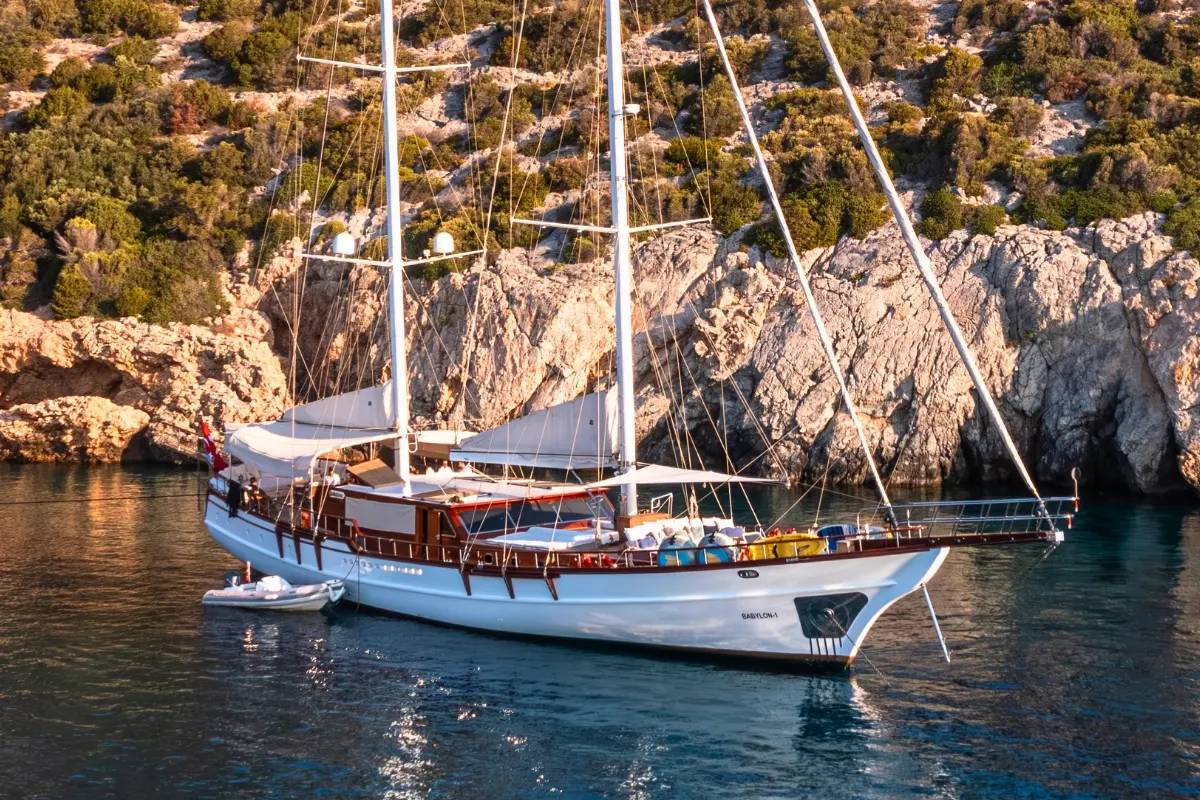
historic Harbour is home to elegant yachts and gullets. The
beautifully preserved Antique Theatre nearby will also delight
you.
Bodrum is less than a two hour drive from
Virgin Mary's house near Selçuk where she arrived accompanied
by St. John, and the city of Ephesus where St. Paul once
preached to the Ephesians. Ephesus where another of the Seven
Wonders of the world, the Temple of Artemis, stood is now
restored to mirror its classic splendour. Bodrum is a friendly
place just to stroll. A walk down the winding alleys past the
typical white houses takes you past artisans who still craft
according to traditions centuries old. The old Castle houses
the world-famous Marine Archeology Museum displaying a unique
collection of vestiges dating from 2000 BC, and the oldest
known shipwreck.
MARMARIS
Surrounded by pine-clad hills, Marmaris
is located on the site of ancient Phykos of which nothing at
all remains since the modern town sits atop the ruins. There
are however numerous examples of Ottoman architecture from the
reign of Süleyman the Magnificent since Marmaris was taken by
him as part of his campaign against the island of Rhodes
nearby. Among the buildings that may be seen are the castle
built in 1521; a caravanserai built in 1545; Tashan, also
built in the 16th century; and the Mosque of Ibrahim Agha,
dated 1789.
Marmaris is deservedly better known for
its natural beauty: the lace-like coastline is embellished
with coves and inlets where one may go swimming, diving, or
fishing. The sheltered bay is excellent for windsurfing.
Accommodations, restaurants, and cafes are plentiful and tours
are available to coves like Içmeler, Kumlubük, Turunç, and
Kadirga. Nearby is a sea cavern called Fosforlu
(Phosphorescent). The forests of fragrant storax trees around
Marmaris offer tempting picnic spots. Marmaris is a calling
place on the Blue Voyage and boats may be hired here to go to
Bodrum and Fethiye. Boat tours are also available to the
nearby ruins of ancient Caunos. Good highway connections make
it easy to visit more distant places like Knidos, Pamukkale,
Aphrodisias, and even Ephesos. The Marmaris marina is amply
provided with everything a yachtsman might need.
FETHIYE Heavily forested region that offers
occasional glimpses of the sea and an islet or two basking in
total seclusion. The Gulf of Göcek and its friendly marina is
one of the Mediterranean's best sailing spots. Dotted with
islands and indented with many coves, its land and seascapes
are irresistible. The ruins of Arymaxa, an ancient city at the
southern tip of the gulf, lie at the edge of the azure waters.
Opposite, on Tersane Island, stand Byzantine ruins, including
those of the ancient shipyards.
The popular resort Fethiye, 135 km
southeast of Marmaris, boasts an important marina at the head
of a beautiful bay strewn with islands. A hill crowned by the
ruins of the crusader fortress built by the Knights of Rhodes
overlooks the little port. Above the town, (called Telmessos
in antiquity), numerous Lycian rock tombs, reproducing the
facades ancient buildings, were cut into the cliff face. The
Tomb of Amyntas, which probably dates from the fourth century
B.C. is the most remarkable.
ANTALYA The city has been open to settlement
since paleoantic age. It has been under the throne of
prevailing lidas in the 7th.cen.b.c. of persians in 546b.c.,
of alexander in 333b.c., during the king attalos era of
bergama, a new city was constructed named attelia. Antil the
4th .cen.a.d. it remained dependent to roman empire. In the
7th cen.a.d. it has been devastaded by arabian incursions. It
has been invaded by seljukians in 1207a.d. the most important
ruins of the city are; hadrianus gate, city walls, kesik
minarete and yivli minaret mosque which is a accepted as the
city symbol.
|